 VapeWholesaleHub
Nicotine Free Cash Flow Planning for Large Buys — Warehouse Teams
A nicotine free programme fails in predictable ways: a specification nobody wrote down, a sample nobody retained, and a lead time nobody stress tested. Here is how to close those three gaps before they cost you a container.
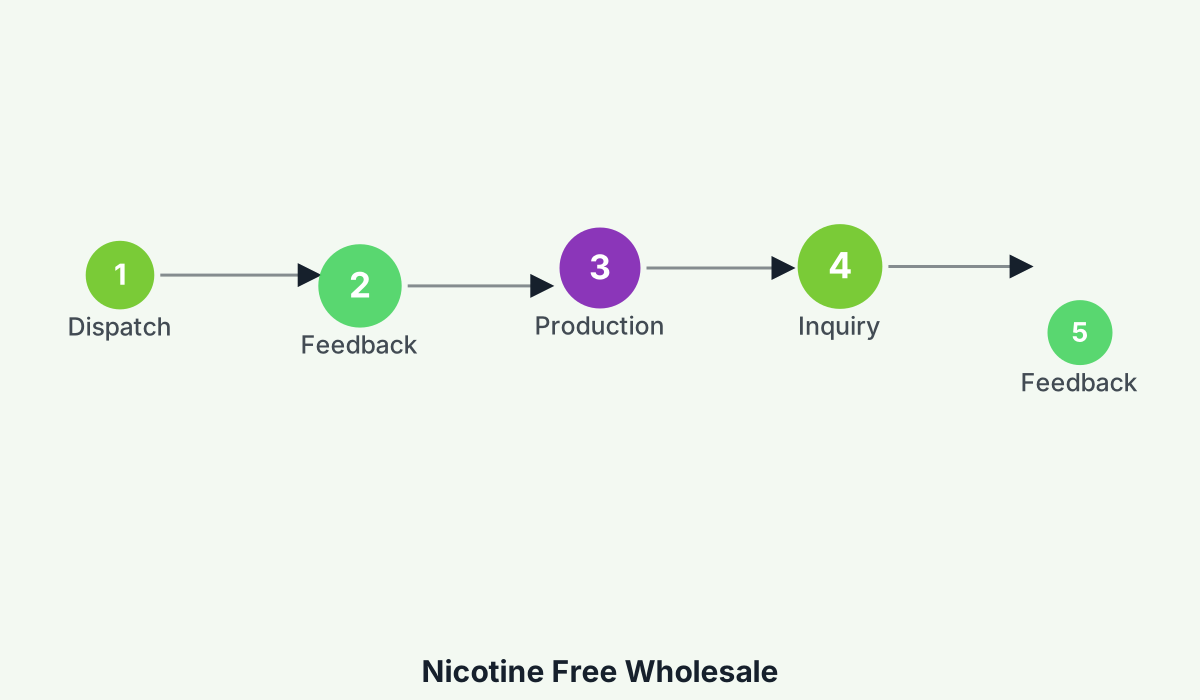
What Nicotine Free Really Costs Landed
Tiered pricing works best when the tiers match real customer behaviour. Most nicotine free buyers will take the second tier if the step is modest and the third tier only if they can see a genuine reason to hold more stock.
Indicative reference points for planning purposes: entry tier from USD 1.82 per unit at 1000 units, mid tier at USD 1.63, and volume tier at USD 1.37 for full container quantities. These figures move with specification, packaging and freight, so treat them as a shape rather than a quote.
Trends Worth Watching
Demand for nicotine free has been steadily rebalancing. The early phase rewarded whoever could ship fastest; the current phase rewards whoever can ship the same thing twice. That shift favours buyers who invest in specification rather than price shopping.
One visible change in nicotine free is the move towards clearer labelling and traceability. Retailers who adopted batch coding early are finding it much easier to work with larger distributors now.
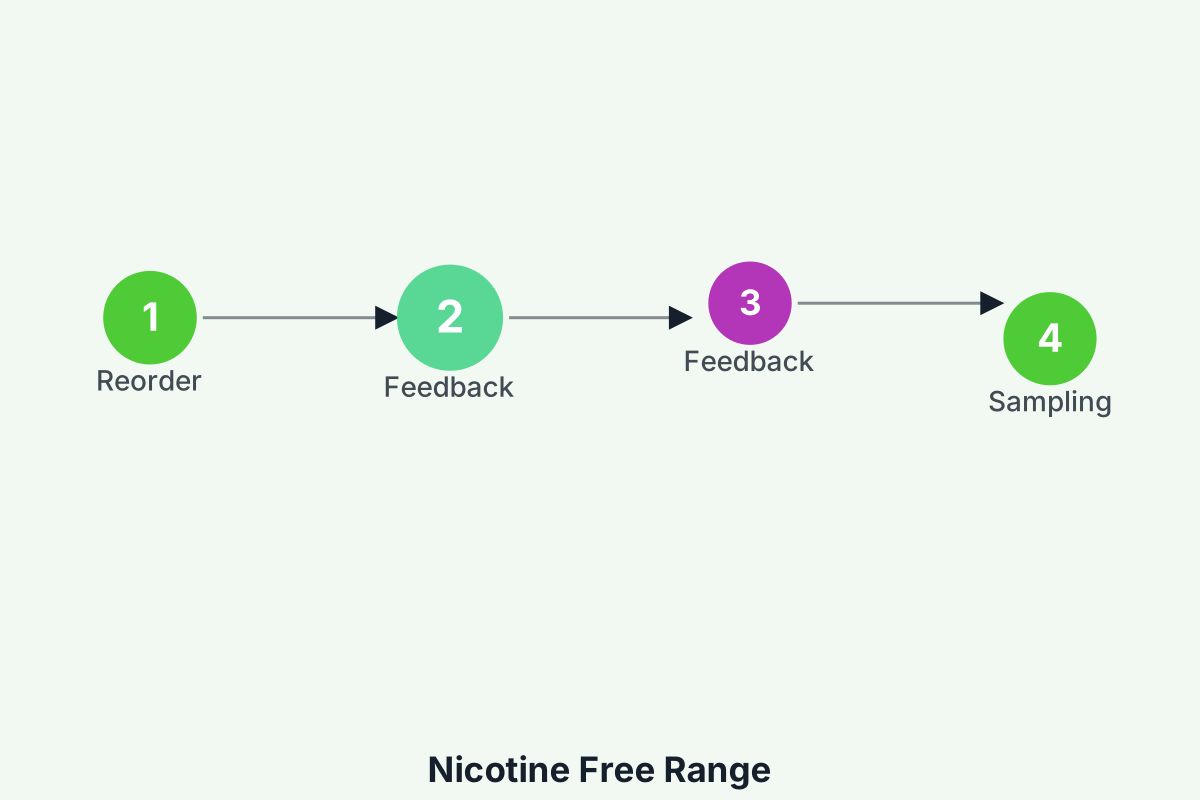
How Nicotine Free Batches Are Checked
Random checks are fine, but weight the sample towards the start and end of a nicotine free production run. Those are where a line is most likely to drift.
- Check carton dimensions against your freight quote before confirming.
- Agree the tolerance band in writing before approving artwork.
- Rotate stock by batch code rather than by delivery date.
- Confirm the current customs classification with your own broker.
- Keep sealed retained samples from every production batch.
Positioning Nicotine Free on Your Shelf
Decide early whether nicotine free is a traffic driver or a margin line in your store. The answer changes how you price it, where you place it and how hard you push it at the counter.
Think about where nicotine free sits in your customer's week. If it is a weekly restock, breadth matters less than availability. If it is an occasional treat, flavour range and display story carry more weight.
Merchandising and Listing Tips
Put nicotine free where the decision is made, not where the margin is highest. In most stores that means near the counter or at eye level in the category, rather than wherever there is spare space.
Rotate nicotine free facing rather than price for the first month. Visibility changes sell-through more reliably than a small discount, and it does not train customers to wait for offers.
What to Fix Before Approving Nicotine Free
Revisit the nicotine free specification after every third order. Small improvements compound, and factories take a buyer more seriously when the document has clearly been used.
When we write a nicotine free specification with a distributor, we fix four things first: the resistance band, the liquid capacity tolerance, the puff count methodology and the packaging master carton. Everything else can flex without changing the customer experience.
| Product category | Open system |
|---|---|
| Resistance band | 0.6 - 0.8 ohm |
| Capacity tolerance | +/- 5% |
| Puff count method | Declared by capacity |
| Master carton | 120 units |
| Carton weight | 8.0 kg |
| Shelf life | 12 months |
| Storage | 15-25 C, dry, away from direct light |
Practical Checklist
- Rotate stock by batch code rather than by delivery date.
- Keep sealed retained samples from every production batch.
- Start with a mixed carton and let your own sell-through decide.
- Model landed cost, not ex-works price, when comparing quotes.
- Agree the tolerance band in writing before approving artwork.
- Confirm the current customs classification with your own broker.
Frequently Asked Questions
How long does a nicotine free order take to arrive?
Production typically takes ten to eighteen working days after artwork approval, and transit depends on the method you choose. Air express is fastest, sea freight is cheapest at volume. We confirm both at quotation so there is no surprise later.
Do you hold stock for regular customers?
For established programmes we can reserve production slots and, in some cases, hold finished nicotine free stock against a forecast. It removes most of the lead time risk from a reorder and is worth discussing once volumes are stable.
Do you provide compliance documents?
Every shipment leaves with the documentation set relevant to your market, including batch records and test reports where required. Your local rules still determine what you must file, so confirm those with your broker before import.
What does a sample pack usually include?
A typical nicotine free sample pack covers the strengths or variants you are most likely to list, packed so you can evaluate them side by side. Tell us which lines you are considering and we will match the pack to that rather than sending a generic selection.
What if a batch does not match the sample?
Keep the retained samples from the approval stage. If a delivered batch measurably differs, we compare against the retained set and resolve it against the production record. This is why we insist on sealed retained units from every run.
Next Step
If you are comparing options right now, send us the specification you have been quoted elsewhere. A side by side reading usually shows where the price difference actually comes from, and that is the most useful first conversation to have.
Related Reading
- Nicotine Free Supplier Scorecard Template — the Buying Desk
- Nicotine Free Reading Factory Capacity Honestly — Updated for 2026
- Nicotine Free Seasonal Peaks and Stock Cover — Freight Included
- How Nicotine Free Performs in Different Climate Conditions — the Buying Desk
- Testing Nicotine Free Consistency Across Three Batches — High Volume Buyers
- Private Label Nicotine Free: Steps From Idea to Carton — Retail Chains